Mahagathe at The World Symposium: Ancient Wisdom for Modern Challenges
Taj Ganges, Varanasi · 2–4 November 2026
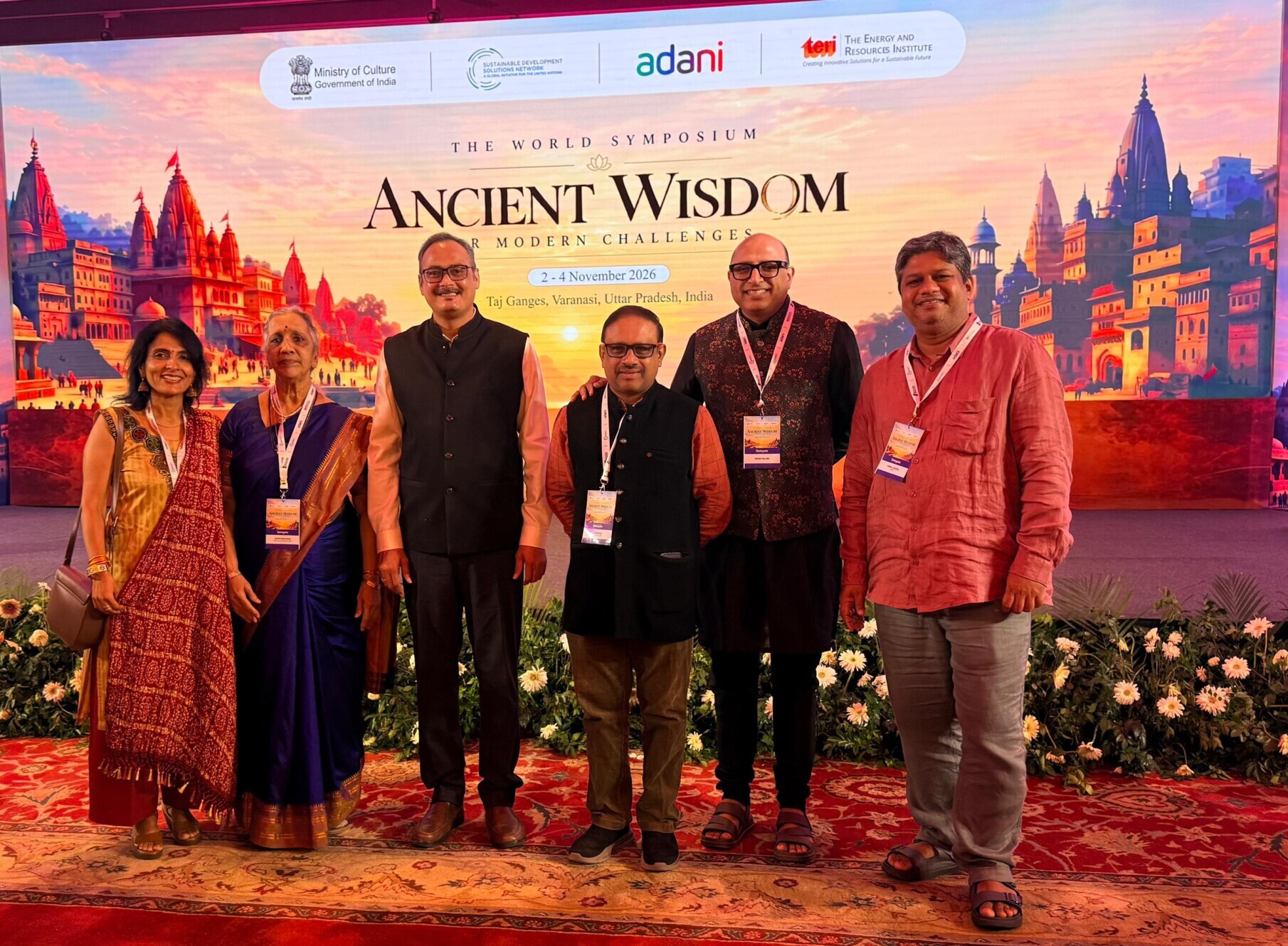
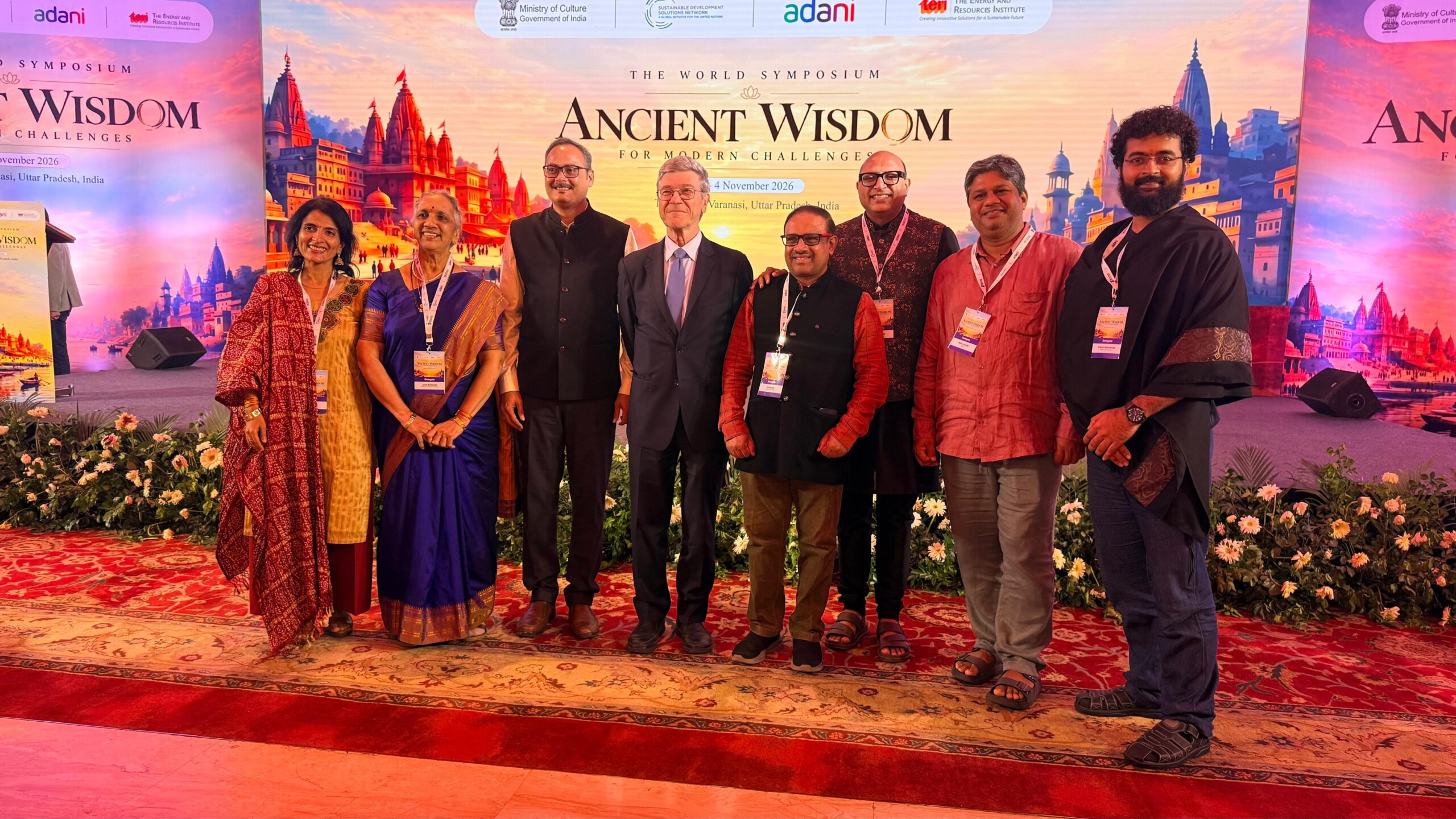
Pavan Bandhu, Adhivāha of Mahagathe Foundation, attended The World Symposium: Ancient Wisdom for Modern Challenges as a delegate. The symposium was held in Varanasi, one of the world’s oldest living centres of learning. It was organised with the Ministry of Culture, Government of India, the UN Sustainable Development Solutions Network (SDSN) and The Energy and Resources Institute (TERI).
A gathering of global voices
The symposium opened with a welcome address by Shri Vivek Aggarwal, Secretary, Ministry of Culture, Government of India. Dr. Nirupam Bajpai, Senior Advisor, Sustainable Development, and Director, South Asia Program, at Columbia University’s Center for Sustainable Development, also welcomed the delegates. Dr. Priti Adani, Chairperson of the Adani Foundation, gave the special address. Prof. Jeffrey D. Sachs, University Professor at Columbia University and President of the UN Sustainable Development Solutions Network, gave the foundational address.
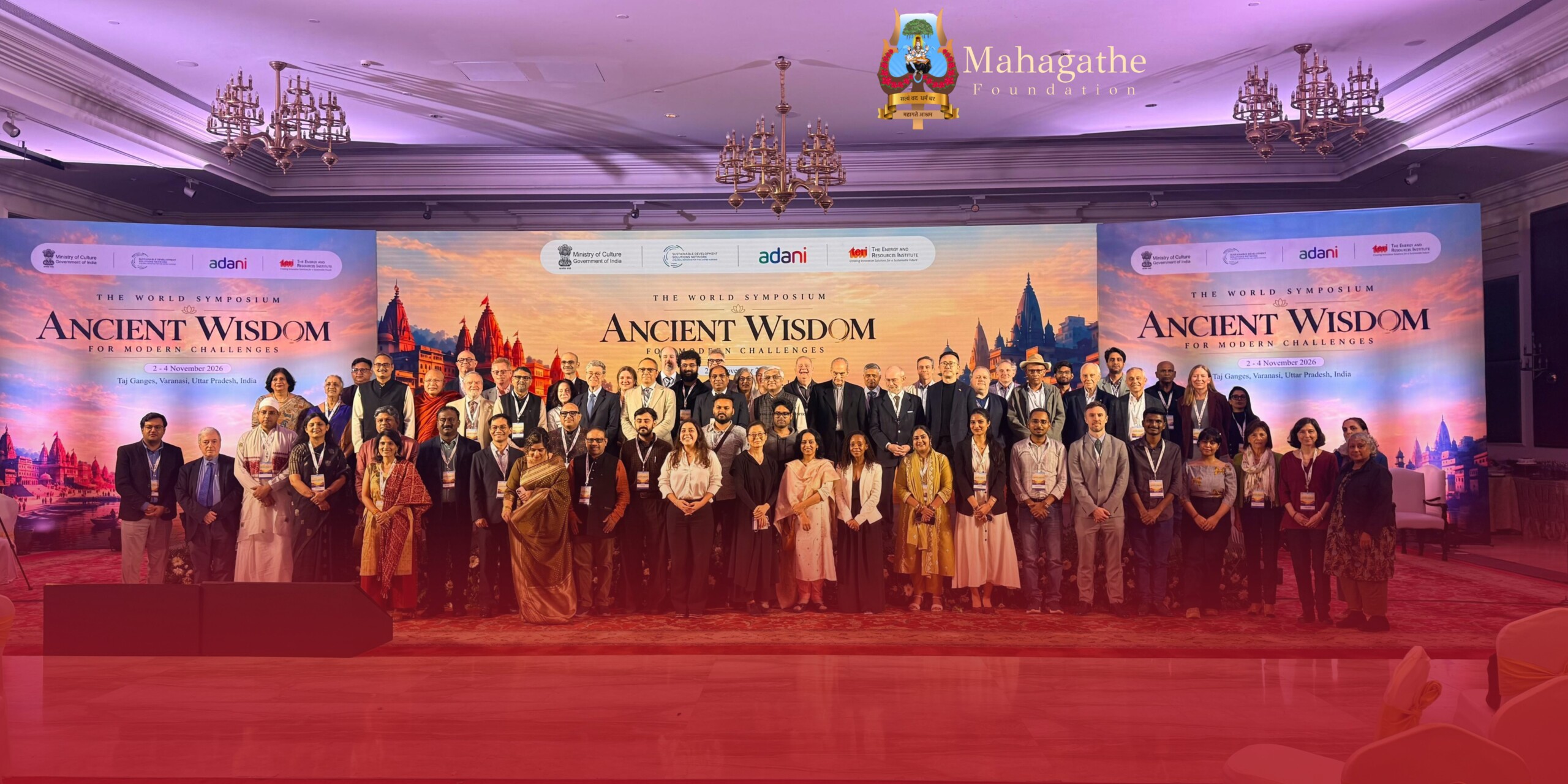
Over seven panels, more than thirty scholars, spiritual leaders and thought leaders spoke, from India, Greece, China, Japan, Cambodia, Ethiopia, South Africa, Europe and the Americas. They included Marcelo Sánchez Sorondo, Thaddeus Metz, Bryan Van Norden, Justin Tiwald, Ven. Kou Sopheap, Rethy Chhem, Riccardo Pozzo, Yannis Ioannidis, Gauri Mahulikar, Dilip Menon, Ami Ganatra and Vibha Dhawan. Together they brought Indian, Greek, Chinese, Buddhist, Islamic, Catholic and African traditions into one conversation.
What the symposium explored
- Dialogue and peace. Unity without uniformity. From the Atharva Veda’s “the Earth is my mother, I am her child” to the Islamic practice of shūrā (consultation) and Buddhist dependent origination, speakers argued that real dialogue rests on compassion and listening.
- The good life. Flourishing is more than economic growth. Aristotle’s eudaimonia was set beside the five kośas of the Taittirīya Upaniṣad, Ubuntu’s “I am a person through other persons”, and the Dhammapada’s “contentment is the greatest wealth”.
- Governance and the common good. Good rule needs both sound institutions and people of character, as in Confucian virtue politics, the Buddha’s Middle Path and Rāja Dharma, the duty to protect the vulnerable.
- Artificial intelligence and wisdom. Regulate the use of AI and keep human agency in charge. As one speaker put it: “Cognition is how we think. Intelligence is what we achieve. Wisdom is why we act.”
- Duty, force and the limits of power. Power is a responsibility, not a position. Drawing on the Arthaśāstra and the Rāmāyaṇa, speakers showed that the ruler exists for the welfare of the people. They also reflected openly on what ancient traditions must still learn.
- A multipolar world. The opening session traced Asia’s return to its historic place in the world. India held about a fifth of world output in 1700 and is projected to regain a leading share by 2100.
The programme closed on 4 November with a cultural immersion along the Ganga ghats and at the Kashi Vishwanath corridor.
Why this matters to Mahagathe
The symposium’s themes reflect the work of Mahagathe’s seven vibhāgas: culture and heritage, Vidyā, Vaidya, social outreach, religion and spirituality, yoga, and sustainability. It showed a growing global recognition that India’s knowledge traditions have something vital to offer the modern world, alongside the wisdom of other civilisations. Mahagathe will carry these insights into its teaching, sessions and programmes for students and seekers.
Vasudhaiva Kuṭumbakam: the world is one family.
Moments from the Event